What to Use and When
You might think thread is thread, but in needlepoint, that’s not exactly true. There are tons of different options, but once you understand how to pick out the right type of thread, everything gets a bit easier.
In this needlepoint thread guide, we’re breaking down exactly how to choose the right thread for your needlepoint projects so that you can stitch with confidence and get great results.

The #1 Rule: Match Your Thread to Your Canvas Mesh Count
The most important factor when selecting the types of needlepoint thread you want to use for your project has to do with your canvas mesh size. It’s less about the material the thread is made from (that's more personal preference) and more about the size you need to get the coverage and detail you’re looking for. Different fibers will give different coverage.
“Mesh size” refers to the number of holes there are in one square inch of canvas.
Want to learn more about mesh size? Read our canvas size explainer here.
For 13 mesh, you’ll need thicker threads, but for 18 mesh, you’ll need thinner threads to get through the canvas holes. Essentially, you’ll want the thread to give good canvas coverage, but not feel overly bulky or difficult to stitch with. If it’s too hard to stitch with, it can distort the canvas and fray the thread, which is definitely not what you want for your finished project. No fuzzy threads here.


Why the Brand of Thread Matters
You might think that the best thread for needlepoint would depend more on the material it’s made from (like cotton threads, silk fibers, wool threads, even specialty threads), but the specific thread line and the brand that makes it actually matters more than you’d likely assume. Make sure you're working with high-quality threads for best results.
Essentially, different brands make different threads for different mesh sizes. Even if you’re working with the same material, the thread may not be exactly the same if it’s made by different brands (you'll also want to make sure you're using the same brand for an entire canvas for color consistency). Ultimately, the coverage the thread provides is going to depend on how it’s made, not just what it’s made of, which means you need to pay attention to the mesh size and the brand, maybe even more than the material.
Brands will often specify which canvas size would go best with the thread you’re looking for, and your local needlepoint shop will be able to help if you’re confused (asking them is a great way to learn more if you're a beginner stitcher!). Many online resources, however, don’t specify which thread goes with which canvas size, so be careful when shopping online. You could end up with thread that doesn’t work for your project.
How to Choose the Right Needlepoint Thread
The best way to make sure you’re picking a thread that’s actually going to work for you is to follow expert guidance. Here’s how:
Many manufacturers will specify which mesh sizes their threads are designed for, which takes the guesswork out of choosing thread.
If needed, you can do a little extra research and visit the manufacturer’s website for extra info about what the brand will recommend, from ideal mesh sizes to number of strands (single strand vs multiple strands), and even coverage tips.
It’s always a good idea to get familiar with your LNS. It’s one of the best resources you have when it comes to picking needlepoint threads, connecting with other stitchers, and more. A lot of shops choose to curate specific threads and fiber options for canvases they sell, so they can help you kit your canvas if you’re unsure.
Some brands make thread that works well across multiple mesh sizes, which can be a great option if you want extra flexibility (or if you just want to be sure you’re getting something that will work). Milan is one brand that works well for 13 mesh and 18 mesh and has a full range of threads to choose from. They're great to keep in your stash of essentials!
What Great Coverage Looks Like
No matter what you’re working on or what kind of thread you’re using, the hope is that you’ll end up with beautiful, consistent (full) coverage. Here’s what that looks like:
- A fully covered canvas (no holes peeking through).
- Glides smoothly as you stitch.
- Feels balanced: not too tight, not too bulky.
If your thread feels too thin, you’ll see the canvas underneath. If it’s too thick, stitching can become difficult and uneven.
When it’s right, you’ll know. It feels easy to stitch, and the final results look polished.
Keep It Simple (Especially at the Beginning)
If you’re just getting started, don’t overthink it.
A simple approach:
- Start with your mesh size. Finer mesh means you'll need thinner thread, larger mesh means you'll need thicker thread.
- Follow brand recommendations.
- Choose a reliable, versatile thread if needed.
Needlepoint is meant to be relaxing and enjoyable. Your favorite threads should support that, not complicate it.
FREQUENTLY ASKED QUESTIONS
What are the best needlepoint threads?
What are the best needlepoint threads?
The best thread depends on the type of canvas you’re using. Choose a thread designed for the mesh size to make sure it’s easy to stitch with and covers the canvas well.
How do I know which needlepoint thread to use?
How do I know which needlepoint thread to use?
Thread choice really depends on your needlepoint canvas mesh count, so make sure you know the mesh size of your canvas. Then look at thread labels, manufacturer recommendations, or advice from your local needlepoint shop and you're sure to make an excellent choice.
Are all threads interchangeable for different sizes of needlepoint canvas?
Are all threads interchangeable for different sizes of needlepoint canvas?
Unfortunately, they’re not. Threads come in various thicknesses and there are lots of different options. Different thread thickness is designed for different mesh sizes, which means you want to make sure you’re using the correct one. If you use one that isn’t meant for your mesh size, you might have a hard time stitching or end up with holes showing through your finished piece.
Does thread material matter in needlepoint?
Does thread material matter in needlepoint?
The material your thread is made from will affect the look and feel of the canvas and stitching experience, but it’s not as critical as the fit for the canvas mesh size. That’s what matters most. Choosing cotton thread, wool blend, pure silk thread, or even metallic thread (who doesn't love a little sparkle?) is more of a personal preference, so long as you're using the right fit.
Is Milan thread good for traditional needlepoint?
Is Milan thread good for traditional needlepoint?
It’s great! We love Milan thread because it’s versatile and can work with both 13 mesh and 18 mesh, so there’s less of a chance of getting the wrong thread.
Can I use the same thread for 13 mesh and 18 mesh canvas?
Can I use the same thread for 13 mesh and 18 mesh canvas?
Sometimes, but not always. Some threads (like our favorite Milan) can work for both canvas sizes, but some threads are designed for one size or the other, so it’s important to take a closer look at the thread label and brand recommendations so that you know you’re making the perfect choice. If your skill level isn’t very advanced, asking for help can really make a difference.
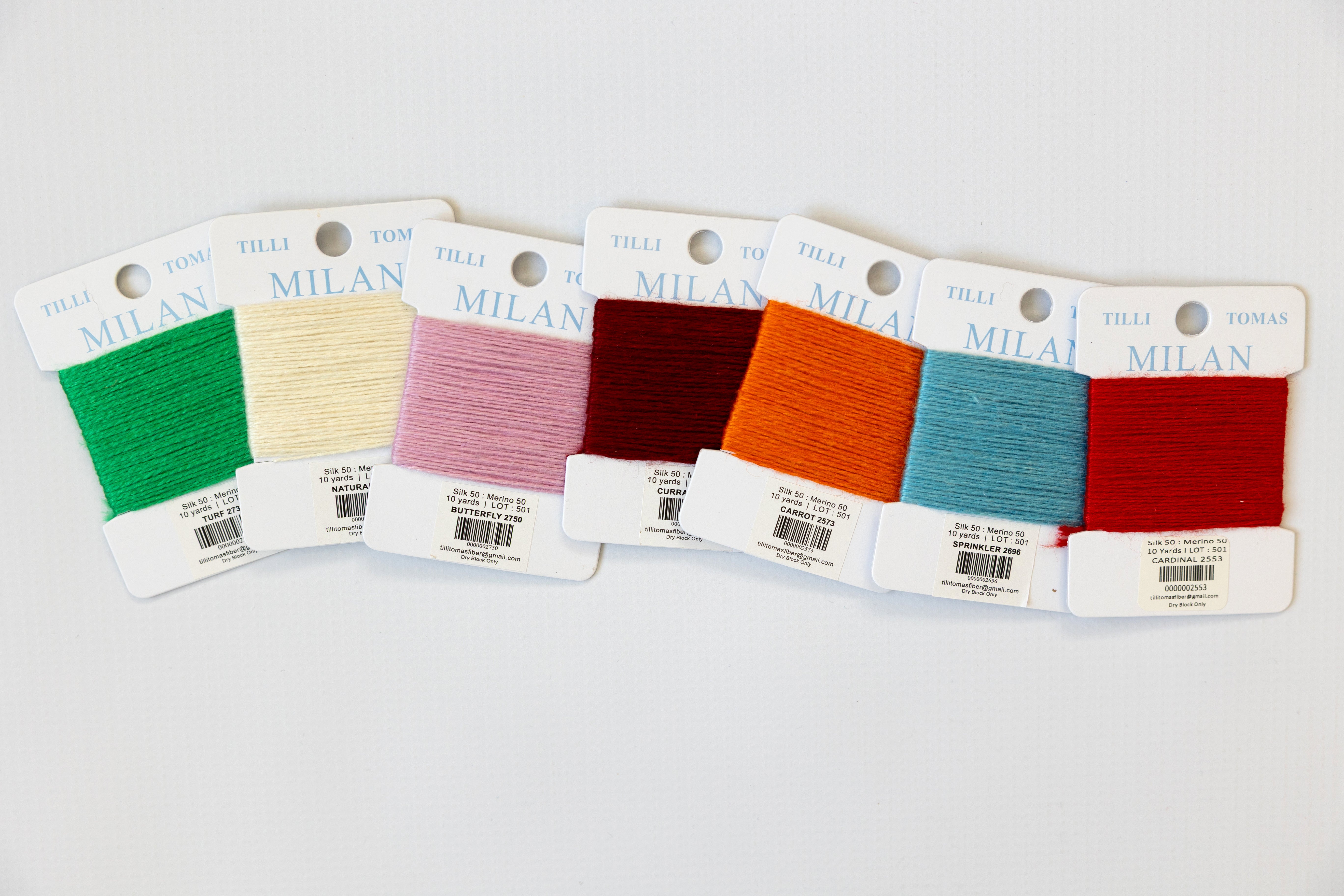
Picking the best needlepoint thread is important!
If you're not already an experienced stitcher, it's extra important to make sure you consult the thread label, brand recommendations, or your local needlepoint shop for guidance if you’re not sure what to use. Using the right thread makes a huge difference. Fit the type of thread to your canvas mesh size and you’ll be ready to stitch in no time.