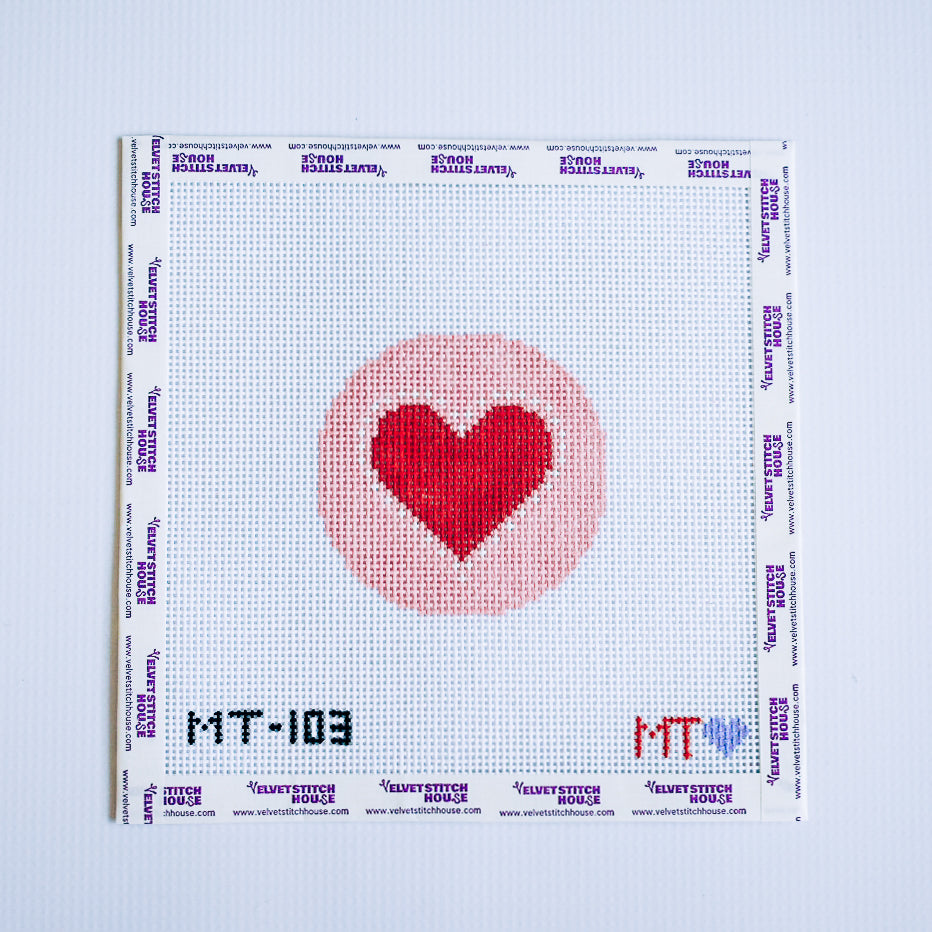
what happens after you stitch
If you’ve just gotten started needlepointing, you might not think very far beyond what it'll take to actually stitch your canvas, but once you finish the stitching, what comes next? How does your project get turned into a pillow, ornament, or coaster?
Needlepoint projects get completed through a process called needlepoint finishing. Though some people choose to do their finishing themselves, there are also professional needlepoint finishers who run businesses based on finishing.
This needlepoint finishing guide breaks down the whole process, explaining what it is, how it works, what it costs, and more.
Let’s dive into it.

what is needlepoint finishing?
Needlepoint finishing is the process of turning your stitched canvases into decorative or functional items like a needlepoint pillow, tray insert, coaster, and more.
Generally speaking, it includes blocking the canvas to make it straight and even, backing or lining the piece, adding decorative cording, piping, or inserts, and then sewing or assembling the finished piece.
The finishing process of a needlepoint project takes your stitched needlepoint canvas into a beautiful piece that's ready to be used or put on display.
Whether you're finished stitching key fobs, clutch inserts, holiday ornaments, door hangers, wall hangings, or even pillows, everything needs to be finished before it's ready for prime time. Depending on your design style, needlepoint pieces, sewing skill level, and more, you'll be able to determine what kind of finishing is needed for the final result to be what you were hoping.

the difference between self finishing and professional finishing
When it comes to finishing, there are two different ways to complete a project: self-finishing (DIY) or professional finishing, where you send out your project, pay an independent finisher to finish it for you, and get it back completely finished.
Ultimately, there’s not a wrong or right finishing approach for needlepoint projects. It’s just about what works best for your skill level, time, and budget. There are benefits of both options.
When you’re self-finishing a needlepoint project, that means that you’re completing your project yourself. People tend to like self-finishing options because it’s usually a cheaper investment than professional finish, you control the timeline and turnaround time, and you have full creative control over the materials and details used in the finishing process. Some projects include self-finishing products, which are specifically designed to finish yourself.
A few notes on self-finishing:
- Self-finishing requires some necessary skills (or a willingness to learn how to sew).
- It takes time, hard work, and a little patience to complete correctly.
- There’s a bit of a learning curve when you first get started, but the good thing is that once you learn basic finishing tasks, you can have some fun with your projects.
If you enjoy the process of self-finishing and want to learn every aspect of the project from start to finish, self-finishing can be a good choice. It’s also great for smaller projects like a needlepoint ornament, stand-up project, acrylic insert, and the like. If you're going to give self-finishing a try, make sure you have sharp fabric scissors, fishing line, backing board, blocking board, backing fabric, fabric clips, invisible thread, fabric glue or textile glue, rust-proof pins, proper stuffing, cording or ribbon, or other high-quality materials.
One of the best things about self-finishing? You can choose custom fabrics, add special trims, and incorporate other custom options, specific details, and additional elements to really make it your own.
Pro tip: Velvet Stitch House is partnering with Sew on Central to offer self-finishing classes so that you can learn how to finish things yourself.
Professional finishing happens when you send out your stitched canvas to an expert finisher who can complete the project for you. People love it because it produces a high-quality, polished look, doesn’t require you to have any sewing skills, and supports small businesses and skilled artisans.
A few notes on professional finishing:
- It tends to be more expensive than going the DIY route.
- There can be quite a long turnaround time (weeks to months).
Not every single project is a good fit for self-finishing though (needlepoint stockings, for instance, can be tricky to finish yourself), so it’s good to consider when you may need to get a professional finisher involved. It’s especially good for heirloom pieces, larger, complex projects, and special gifts.
how to choose the right finishing option for you
There’s no right or wrong when it comes to finishing for needlepoint projects, but there are a few things you might want to consider when picking between self-finishing or professional:
Generally speaking, self-finishing is going to be a more affordable option than sending it to a professional, but professional finishing can be worth the cost for special or complex pieces.
If you’re imagining something that’ll be highly detailed or super custom, you might want to bring in a professional, but if you’re keeping the project simple, DIY might be the way to go.
If you feel good about your sewing skills, you can give self-finishing a try, but if even the thought of finishing something yourself gives you stress, it’s best to send it out. Professional finishers do beautiful work!
You can totally decide project by project. Many needlepoint enthusiasts do a combination of self-finishing and sending things out for professional help.You can totally decide project by project. Many needlepoint enthusiasts do a combination of self-finishing and sending things out for professional help.
finishing resources when you need help
If you don’t know where you should start, there are plenty of resources to help you. You can reach out to your local needlepoint store (LNS) for a recommendation for a professional finisher (or to as general questions), you can reach out to the team at Velvet Stitch House for guidance and suggestions, you can find lots of online sources for how to complete various projects, or you can learn directly, hands-on from experts with our self-finishing classes in partnership with Sew on Central.
Needlepoint is a community craft, and finishing is no exception.
frequently asked questions
What is the best way to finish needlepoint?
What is the best way to finish needlepoint?
The best method depends on your goals. Self-finishing is more affordable and flexible, while professional finishing offers a high-end, polished result.
Is self-finishing needlepoint hard?
Is self-finishing needlepoint hard?
It can be tough at first, especially if you’re new to sewing (and depending on the complexity of the finishing techniques). Starting with simple projects and taking a class can make it much more approachable.
How long does a professional needlepoint finisher take to finish needlepoint canvases?
How long does a professional needlepoint finisher take to finish needlepoint canvases?
Turnaround times vary, but it’s common for finishing to take several weeks to a few months, depending on the finisher and the season. Busier seasons mean longer turnarounds with professional finishers
Is professional needlepoint finishing worth it?
Is professional needlepoint finishing worth it?
For special projects, gifts, or heirlooms, yes. The craftsmanship and detail can really elevate your finished product.
Can beginners self-finish needlepoint?
Can beginners self-finish needlepoint?
Absolutely. Many beginners start with simpler items like needlepoint ornaments or acrylic inserts and build specific skills over time and learn proper finishing techniques.
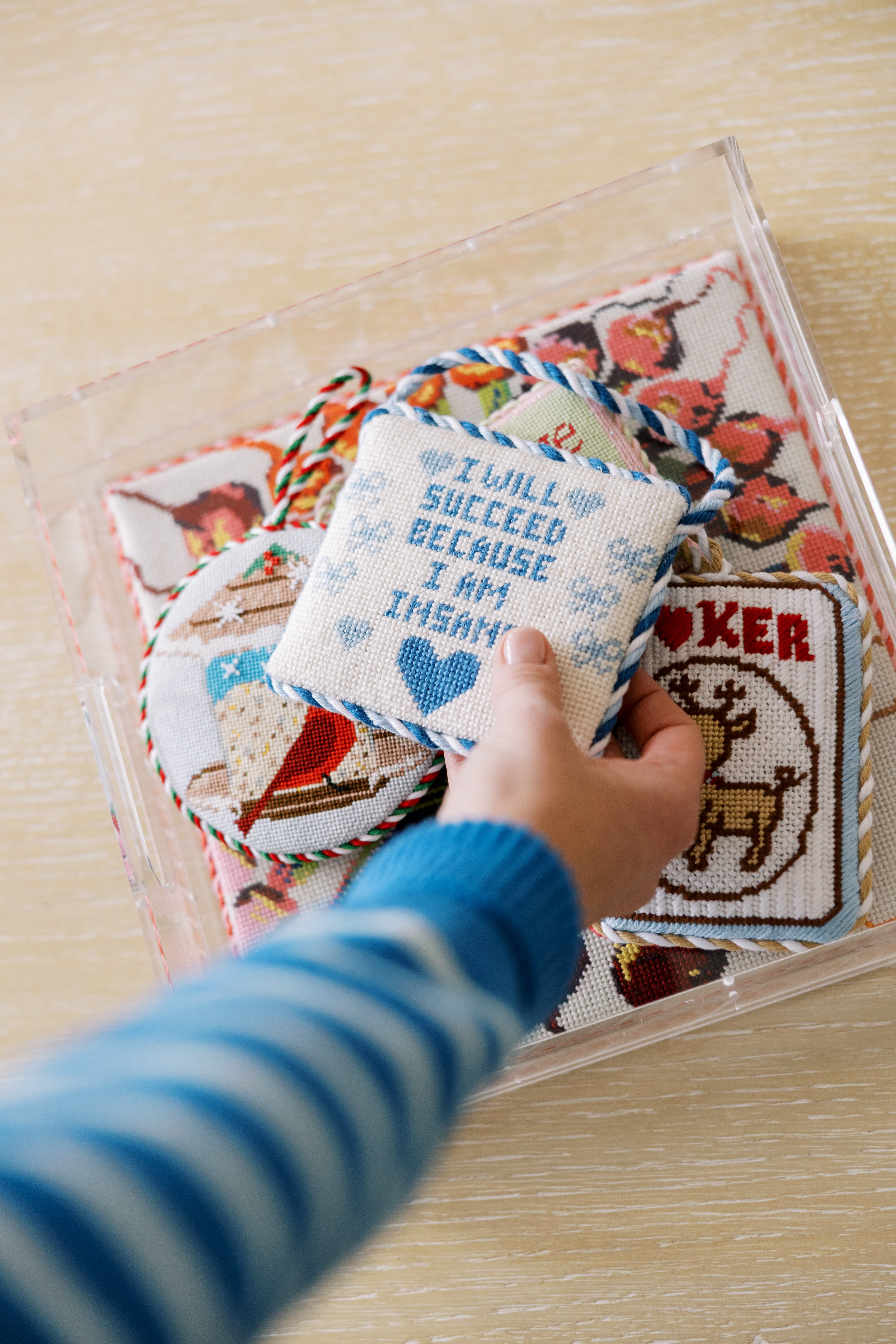
happy finishing!
Finishing is the special touch that brings your needlepoint project to life, and while it can be a little intimidating to think about if you haven't given it a try before, it really doesn't have to be completely overwhelming.
Whether you decide to try self-finishing for a more hands-on experience or you want to send your finished canvas out to a professional for a more polished result, you're still creating pieces of art that are meaningful, personal, and uniquely yours. And that’s what makes needlepoint so special, from first stitch to final finish.
Once you get the hang of some of the simpler self-finishing methods, you can really have some fun personalizing your needlepoint piece. But it's never the wrong decision to send something out for a professional to take the lead on. Experienced finishers can make your project look its absolute best.