How to Get Started
Needlepoint has had a major moment over the past few years, and once you try it, it’s easy to see why. It’s creative, calming, and a genuinely satisfying way to spend your time. Whether you’re picking up a new hobby for the first time or looking for something screen-free to unwind with, needlepoint is a great way to slow down and make something beautiful.
If you’re stepping into the world of needlepoint for the first time, this comprehensive guide will walk you through everything you need to begin your first project with confidence, from choosing the right needlepoint canvas to learning your first stitch.

Start with the Right Canvas
Your first canvas can make or break your experience, so it’s worth choosing carefully.
A 13 mesh canvas is widely considered the best starting point for beginners. Mesh size refers to how many holes there are per square inch, and with 13 mesh, those holes are larger, meaning:

Bigger holes that are easier to see.
A more open-weave canvas.
More forgiving stitching.
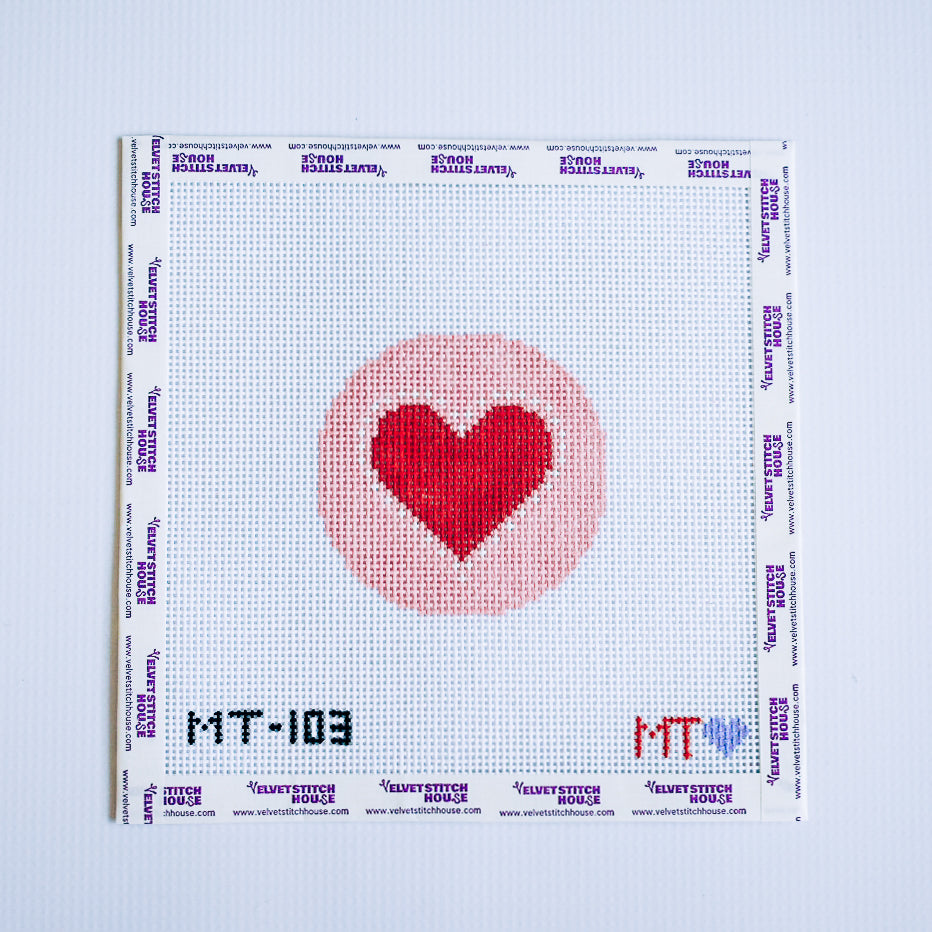
Choose a Simple First Project
These types of projects help you focus on your stitching technique instead of juggling too many elements at once.
Some designers are specifically known for approachable, beginner-friendly canvases that strike the perfect balance between fun and manageable.
Starting small is the biggest tip for building confidence early in your needlepoint journey.

A design with fewer than three colors.
A clearly defined area to stitch.
Smaller projects like key fobs, eyeglass cases, or small ornaments.
Learn One Stitch First
There are tons of resources and many different types of stitches in needlepoint, but you don’t need to learn them all at once.
Start with the continental tent stitch, one of the most popular needlepoint stitches and a foundational stitch you’ll use again and again.
It’s part of the family of tent stitches, which are the foundation stitches of needlepoint. These stitches are worked in diagonal rows and provide good coverage across your canvas.

It’s simple and easy to memorize.
It works well for small projects and defined areas.
It helps you understand the rhythm of stitching.
You can build confidence from there.
Gather the Right Supplies
You don’t need a huge toolkit to begin, but having the right supplies makes all the difference. Here’s what you’ll need:
- Tapestry needle: A tapestry needle has a blunt tip and a larger eye of the needle, making it easier to work with thicker threads.
- Size 20 for 13 mesh
- Size 22 or 24 for 18 mesh
- Thread: Look for high-quality threads suited to your mesh canvas. The best thread for needlepoint depends on the canvas size, not just the material. Some threads come as a mixture of single strand fibers, so you may need to adjust for comfortable plying depending on the thickness. Options include: Merino wool, cotton blends, and man-made fibers.
- Embroidery scissors: A small, sharp pair is essential for trimming your piece of thread cleanly.
- Needle threader: Especially helpful when you’re learning to work with the eye of the needle.
- Stretcher bars: If your canvas is larger than about 6x6, stretcher bars help keep it taut and prevent distortion as you stitch.

How to Start Stitching
When you reach the end of your thread, weave it into the back of your canvas. You can also tie a knot, however, it's personal preference.
Starting a new thread is simply a matter of anchoring it in the same way and continuing your pattern.
If you’re a visual learner, there are plenty of tutorial videos and stitch diagrams online that offer step-by-step instructions
- Begin at your starting point, usually near the top of the canvas.
- Use a waste knot to secure your thread at the beginning.
- Work in either horizontal rows or diagonal rows for consistency (this is based on the stitch you’re using!)
- Keep your tension even, not too tight, not too loose.
What About More Advanced Stitches?
These can create beautiful textures, tiny details, and fluffy effects, but they’re not necessary for a needlepoint beginner.
Focus on foundational stitches first. Once you’re comfortable, adding new techniques, intricate elements, and little details becomes much more intuitive, and way more fun.

French knots

Short stitches

Composite or decorative stitches
Understanding the Back of the Canvas
One thing many beginners don’t realize is that how your stitches look on the back of your canvas actually matters.
Don’t stress about perfection, but be aware that consistent stitching helps your finished piece look cleaner and more professional.
Continental stitch creates diagonal stitches on the back.
Basketweave stitch creates a woven pattern that helps prevent warping.
Why We Love Beginner Needlepoint Kits
If sourcing everything individually feels overwhelming, beginner needlepoint kits are a great way to start.
A curated beginner needlepoint kit will remove the guesswork and ensure you have the right supplies from the start. It's especially helpful for your first time working on a needlepoint project.
A 13 mesh needlepoint canvas.
Coordinated, high-quality threads.
A tapestry needle.
Sometimes even sharp scissors and a stitch guide.
Finding Resources
One of the best parts of starting needlepoint today is how many resources are available.
From online stores to free beginner’s guides, you’ll find:
- Tutorial videos
- Stitch diagrams
- Good stitch guides
- Inspiration from the needlepoint community
Whether you’re browsing best sellers, exploring canvas types, or learning new techniques, there’s no shortage of support as you grow. Need more help? Stop by your local needlepoint shop for advice and recommendations.
Starting something new can feel intimidating, but needlepoint is meant to be fun. Your first project doesn’t have to be flawless (and very well may not be! Learning takes time.)
Start simple. Use the right supplies. Focus on foundational stitches. And give yourself time to learn.
If you’re ready to start your needlepoint journey, explore beginner-friendly canvases at velvetstitchhouse.com, or follow along on Instagram @velvetstitchhouse for tips, inspiration, and updates as we get ready to open our Evanston shop.